
Market Update

Hormuz Demining Sets 40–50 Day Clearance, BW Opal Hits IPT at Barossa, Myanmar Confirms 95 TCF Andaman Gas Reserves

Three developments reshaping Gulf workforce mobilisation timelines, APAC FPSO talent availability, and Andaman Sea competition for deepwater specialists

June 16, 2026 5 min read Strait of Hormuz · FPSO Commissioning · Deepwater Gas IntelliS Research Team

Executive Summary

Three developments this week are redrawing offshore workforce timelines across the Gulf and Asia-Pacific: the Strait of Hormuz demining operation requiring 40–50 days before regular transit resumes, BW Offshore's FPSO BW Opal completing its Interim Performance Test at Santos' Barossa LNG — triggering a commissioning-to-O&M workforce transition — and Myanmar confirming 95 TCF of deepwater gas reserves in the Andaman Sea, intensifying regional competition for deepwater specialists.

Together, these events define a Gulf CAPEX acceleration deferred to August, a rare alignment in APAC commissioning talent supply, and a potential new frontier in Southeast Asian offshore development constrained by political risk.

1. Hormuz Reopening: 40–50 Day Demining Window Sets August Baseline for Gulf Mobilisation

Strait of Hormuz — Gulf offshore operations
Strait of Hormuz / UAE / Qatar June 16, 2026 Source: Reuters / Western Maritime Security Sources

The US-Iran peace agreement signed on 14 June has opened the Strait of Hormuz in principle, but clearing naval mines will require 40 to 50 days before insurers and oil producers deem the waterway safe, according to five Western maritime security sources. Roughly 300 loaded tankers remain stationary inside the Gulf, with another 300 empty vessels queued outside — a fleet frozen since the IRGC closure order reduced daily transits from 153 to 13.

LNG carrier Disha, chartered by India's Petronet, has become the first confirmed vessel to transit Hormuz carrying a QatarEnergy cargo with AIS switched on — the eighth QatarEnergy-linked LNG carrier to exit the Gulf since shipments resumed in late May. BIMCO has cautioned that "unclear statements" from both parties mean transits remain high-risk.

Onshore, UAE's Habshan Gas Plant is operating at 60% capacity following conflict-related damage; officials expect 80% by year-end and full structural restoration only in 2027. ICIS forecasts Qatar and UAE LNG output will return by August 2026 at reduced capacity, with two of Qatar's fourteen Ras Laffan LNG trains still offline.

Workforce Implications

The 40–50 day demining window pushes Gulf offshore CAPEX acceleration to early August at the earliest. ADNOC, Saudi Aramco and QatarEnergy will defer FID approvals and EPC tender awards until insurance premiums normalise and vessel traffic resumes at scale.

Expatriate professionals who relocated during the 100-day closure are unlikely to return en masse before Q3, creating a window where contractor mobilisation costs remain elevated. The Habshan plant damage means associated offshore gas production support roles will not return to full workforce until 2027.

2. BW Opal FPSO Reaches IPT at Barossa LNG: Commissioning-to-O&M Transition Begins

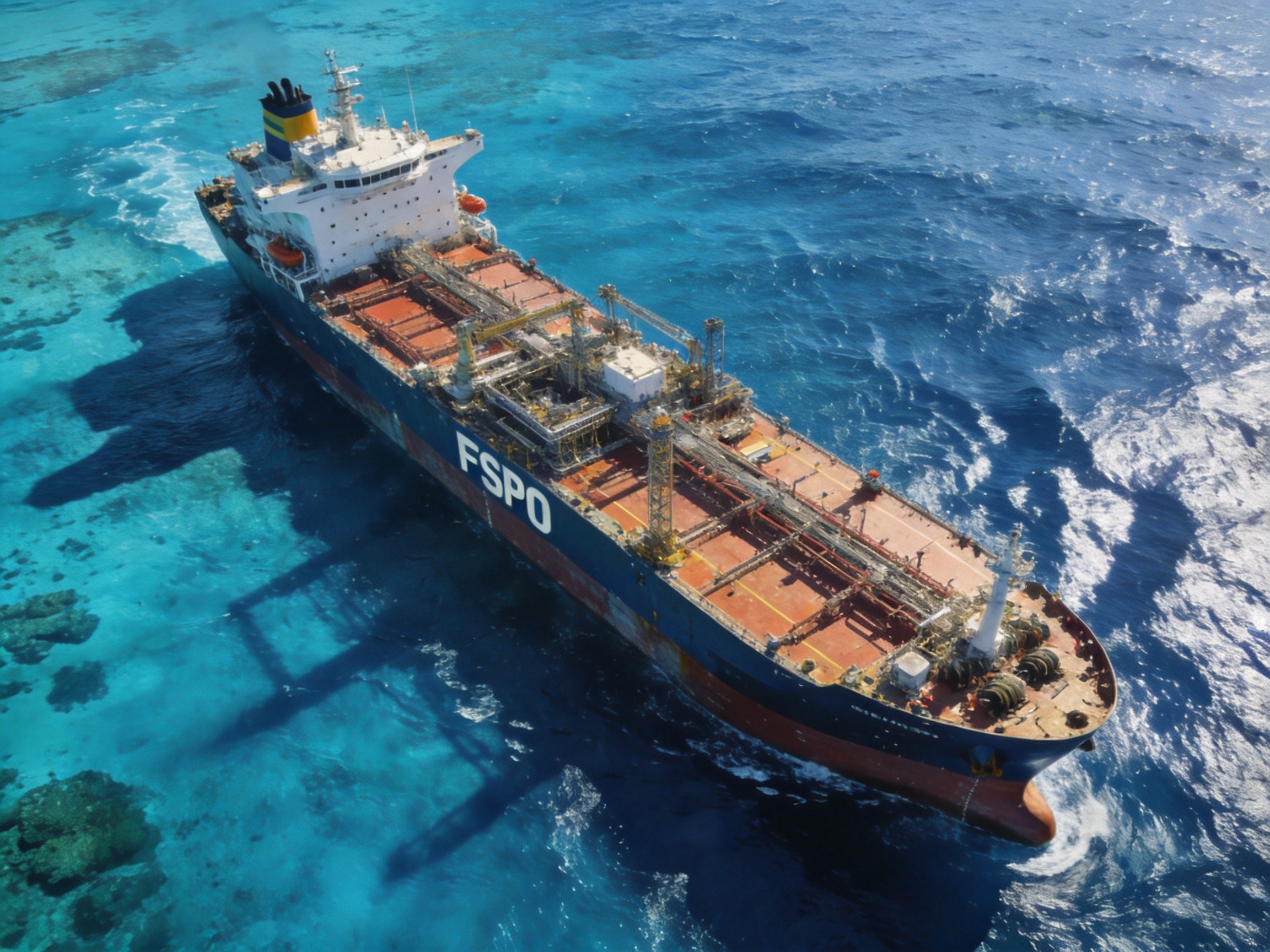
FPSO commissioning — BW Opal at Barossa LNG
Australia, Barossa Gas Field June 16, 2026 Source: World Oil / OE Digital / IndexBox

BW Offshore has completed the Interim Performance Test (IPT) for the FPSO BW Opal at the Santos-operated Barossa LNG project offshore northern Australia. The test confirms that production, processing and utility systems are operational, raising the payable day rate from 60% to 85% under the charter agreement.

The next milestone — Practical Completion — will trigger the full contractual day rate and commence the 15-year firm charter period. The Barossa venture is held by Santos (50%), PRISM Energy International Australia (37.5%) and JERA (12.5%).

Workforce Implications

The IPT-to-Practical Completion transition triggers a workforce composition shift. EPCIC-phase commissioning specialists — process engineers, pre-commissioning supervisors, hookup technicians — will be demobilised over the coming weeks, replaced by leaner O&M crews on long-term rotations.

For the APAC FPSO talent market, the Barossa ramp-down releases a cohort of commissioning-experienced personnel exactly as other regional projects (Eni-PETRONAS Searah, bp Tangguh UCC) enter their own hookup phases — a rare alignment that tempers supply-side tightness for commissioning roles through H2 2026.

3. Myanmar Confirms 95 TCF Deepwater Gas Reserves in Andaman Sea

Deepwater drilling — Andaman Sea gas reserves
Myanmar, Andaman Sea / Tanintharyi June 16, 2026 Source: Myanmar Ministry of Information / The Irrawaddy

Myanmar's Ministry of Information has confirmed two major offshore gas reserve bases: an estimated 95 TCF at P90 probability in the Tanintharyi deep-sea zone and 14 TCF of proven reserves in the Ayeyawady offshore region. Four offshore projects are currently operational, with four additional projects in preparation. The Ayeyawady field is moving toward commercial production, while Tanintharyi requires further exploratory drilling.

Gulf Petroleum Myanmar Co. is involved in the Min Ye Thu Project in the Tanintharyi region, alongside Myanma Oil and Gas Enterprise (MOGE).

Workforce Implications

If these reserves advance to development, the Andaman Sea would host one of the largest offshore gas build-outs in Southeast Asia — directly adjacent to Indonesia's Kutei Basin where Eni's Gendalo-Gandang and Geng North-Gehem FIDs are already in execution. The geographic clustering would intensify competition for deepwater drilling teams, subsea engineers and FLNG/FPSO specialists across the Andaman corridor.

However, development timelines remain highly uncertain given Myanmar's political situation and international sanctions risk, which limits IOC participation and constrains project financing. Near-term talent impact is therefore limited to exploration and appraisal drilling crews rather than full-field development workforces.

IntelliS Intelligence Assessment

This week's three developments create a divergent Gulf-APAC talent dynamic that workforce planners should position for now:

  • Gulf mobilisation remains on hold until August. The 40–50 day demining window means ADNOC, Saudi Aramco and QatarEnergy will not restart deferred FIDs and EPC awards until insurance normalises. Contractors should use this window to pre-position mobilisation plans and lock in specialist assignments before the Q3 surge.
  • APAC commissioning talent gets temporary relief. The Barossa BW Opal ramp-down releases experienced commissioning specialists precisely as Searah and Tangguh UCC ramp up — a rare supply-demand alignment. Companies filling APAC hookup roles should move quickly before this cohort is absorbed.
  • Andaman Sea talent competition is structural, not cyclical. Myanmar's 95 TCF reserves — if developed — would overlap geographically with Indonesia's Kutei Basin expansion, creating sustained demand for deepwater and subsea specialists across the corridor. Even with sanctions risk, exploration-phase demand for drilling teams is already rising.

Data Sources: Reuters, Western Maritime Security Sources, World Ports, ICIS, World Oil, OE Digital, IndexBox, Myanmar Ministry of Information, The Irrawaddy, Myanmar ITV, House of Saud, Turkiye Today. Data as of June 16, 2026.

Intelligence Note

Access our EPCIC Salary Benchmarks — 1,572 data points across 45 disciplines, 9 markets, 3 seniority levels. Data sourced from IntelliS Talent Intelligence Database covering 782 benchmarks across 45 disciplines. Explore our intelligence products →

Back to News
Share: LinkedIn
Was this insight useful?