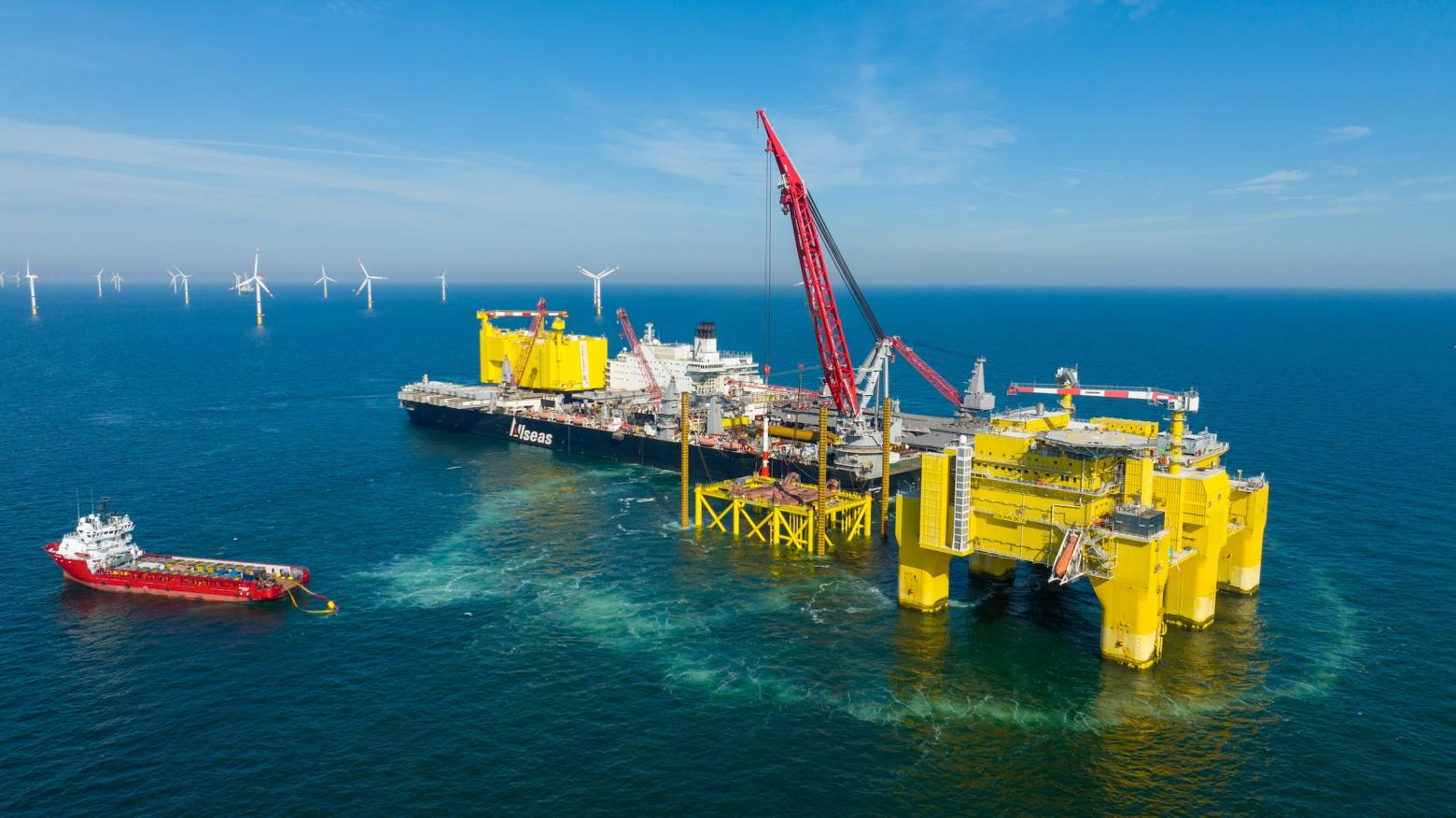
The Philippine Department of Energy formalised a cooperation framework with ten Norwegian energy companies — including DNV, Fred. Olsen Windcarrier, and Reach Subsea — to accelerate the country's offshore wind buildout. Energy Secretary Sharon Garin hosted the Norwegian delegation in Manila during the Asia Clean Energy Forum (ACEF) week, with discussions centred on technology transfer, engineering expertise, and workforce training.
The Philippines holds an estimated 178 GW of offshore wind potential — roughly 400 times its current wind capacity of 440 MW. Over 200 representatives from government, industry, and finance attended a subsequent seminar at the Asian Development Bank covering policy frameworks, grid upgrades, port infrastructure, and workforce development. Philippine developers ACEN and Copenhagen Offshore Partners engaged directly with Norwegian counterparts on the practical challenge of moving projects from planning to construction.
This cooperation follows the country's declaration of a State of National Energy Emergency earlier in 2026 and the shortlisting of nine companies for the Green Energy Auction 5 (GEA-5) offshore wind round, with the auction proper scheduled for 27 August and notices of award expected 23 September 2026.
Norwegian companies like Fred. Olsen Windcarrier and Reach Subsea are established offshore marine and subsea operators whose core workforce — naval architects, marine engineers, ROV pilots, and installation supervisors — overlaps directly with the subsea O&G labour pool. Their commitment to Philippine offshore wind creates a new demand channel that competes with traditional O&G project mobilisation across Southeast Asia.
The convergence of GEA-5 auction preparations and this bilateral framework means that by H2 2027, the Philippines will be competing simultaneously for the same offshore installation and commissioning talent that Malaysian, Indonesian, and Vietnamese operators are mobilising for upstream gas projects. Mobilisation timelines for floating wind installation vessels and specialised subsea cable-lay crews are already extending; the 178 GW pipeline will tighten day-rates for marine spread and push lead times for experienced offshore supervisors well beyond current 90-day norms.